

Solar + Electrical Integration in New Homes: Why You Need to Plan This Before Construction Starts
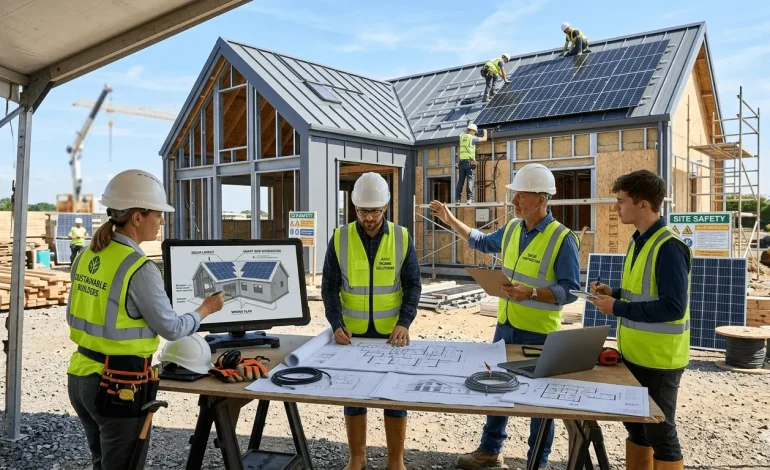
Solar & Electrical Planning for New Homes, Best Civil Works Kochi
Introduction
Kerala is going solar and fast.
Drive through any neighborhood in Kochi, Thrissur, or Thiruvananthapuram today, and you’ll spot solar panels on rooftops everywhere. KSEB bills are climbing, power cuts are unpredictable, and homeowners are finally waking up to one simple truth: solar isn’t a luxury anymore, it’s a smart long-term investment.
But here’s what most people get wrong.
They built the house first. Then they think about solar.
That one mistake ends up costing lakhs in rework, broken tiles, rewired distribution boards, ugly surface conduits running across freshly painted walls, and structural changes to rooftops that were never designed to hold panel weight.
The right time to plan your solar and electrical integration is before your foundation is even laid.
If you’re building a new home in Kochi or anywhere in Kerala, this blog is for you. At the end of it, you’ll understand exactly why solar-ready electrical planning from day one saves money, future-proofs your home, and makes the entire construction process smoother.
And if you’re looking for the best civil and electrical constructions in Kochi, Kerala, the kind that thinks ten years ahead, not just today, you’re already in the right place.
Why Is Solar Integration Becoming Essential in Kerala’s New Home Construction?
Kerala receives an average of 4 to 5 peak sunshine hours per day, making it one of the most solar-viable states in India. Add to that rising electricity tariffs, KSEB’s net metering policy, and central government subsidies under PM Surya Ghar Muft Bijli Yojana, and the case for solar becomes impossible to ignore.
For new homeowners in Kochi and Ernakulam, going solar during construction is significantly cheaper than retrofitting later. A home built with solar-ready electrical infrastructure, proper conduit routing, load-bearing roof design, and dedicated DB compartments eliminates almost all the rework costs that come when solar is added as an afterthought.
“How much does solar panel installation cost in a new home in Kerala?” is one of the most searched questions right now, and the honest answer is: far less when planned from the start.
The best civil and electrical constructions in Kochi, Kerala, now treat solar integration as a standard part of the design process, not an optional add-on.
What Happens If You Don’t Plan Solar Before Construction Starts?
This is where most homeowners feel the pain, usually two or three years after moving in, when they finally decide to go solar and get hit with a brutal reality check.
Here’s what unplanned solar retrofitting typically involves:
Rooftop rework — If the roof slope, orientation, or load capacity wasn’t designed for panels, structural modifications are needed. That means breaking into finished roofing, which is expensive and messy.
Electrical rewiring — Your existing distribution board may not have space or capacity for a solar inverter connection. Running new conduits through plastered walls means hacking, replastering, and repainting entire sections of the house.
Conduit routing chaos — Solar systems need dedicated DC wiring from the rooftop panels to the inverter, and AC wiring from the inverter to the DB. If conduits weren’t laid during construction, cables end up running on surface channels, ugly, inefficient, and vulnerable.
Earthing and safety upgrades — Solar systems require proper earthing infrastructure. Retrofitting this in a finished home is far more complicated than building it in from day one.
The average cost of solar retrofitting rework in a completed home in Kerala ranges from ₹30,000 to ₹1,50,000, which could have been completely avoided with proper upfront planning.
How Should Solar-Ready Electrical Planning Work in a New Home?
Great question, and this is where working with the best civil and electrical constructions in Kochi, Kerala makes all the difference.
Here’s what a properly integrated solar electrical plan looks like from the ground up:
1. Roof Design and Orientation The civil design team should orient the roof to maximize south-facing surface area — ideally with a pitch between 10° and 30° for Kerala’s latitude. Load-bearing calculations must account for panel weight (typically 12–15 kg per panel) during the structural design stage.
2. Conduit Pre-laying Before walls are plastered, dedicated conduits are laid from the rooftop to the inverter location and from the inverter to the main distribution board. This is invisible, clean, and costs almost nothing when done during construction, but costs significantly when done later.
3. Dedicated Solar DB Compartment A separate compartment or space within the main distribution board is reserved for solar components, the solar MCB, bi-directional meter connection, and inverter AC output. This is standard in any future-ready home electrical design.
4. Earthing Infrastructure Proper earthing pits are installed during civil work, to the right depth, with the right materials, and the right connections to handle both conventional and solar loads safely.
5. Load Analysis and Sizing. Your electrical contractor should analyze your expected household load, including ACs, water heaters, EV chargers, and appliances, and size the solar system accordingly. A 3 kW system might be fine today, but if you’re planning an EV in three years, you need a 5 kW-ready infrastructure now.
6. Net Metering Readiness KSEB’s net metering process requires a bi-directional meter installation. Planning this during construction means your meter room and incoming line are already set up correctly, no surprises during the KSEB approval process.
Which Solar System Is Right for Your New Home in Kochi?
Choosing the right solar system type is just as important as the electrical integration planning. Here’s a simple breakdown for homeowners in Kerala:
On-Grid Solar System Connected to the KSEB grid. Excess power is exported and credited to your bill through net metering. Best for homes with reliable grid supply. Most popular choice in urban Kochi and Ernakulam.
Off-Grid Solar System: Fully independent of the grid. Uses battery storage to power the home during outages. Best for areas with frequent power cuts or remote locations. Higher upfront cost, but complete energy independence.
Hybrid Solar System: The best of both worlds, connected to the grid but also has battery backup. Powers your home from solar during the day, stores excess in batteries, and falls back to the grid only when needed. Increasingly popular in new premium homes across Kerala.
For most new homes being built in Kochi today, a 3 kW to 5 kW on-grid or hybrid system is the sweet spot — covering 80–100% of average household consumption while qualifying for government subsidy.
What Are the Government Subsidies Available for Solar in Kerala Right Now?
One of the most common questions homeowners ask is, “Can I get a subsidy for solar panels on my new home in Kerala?”
Yes, and it’s substantial.
Under the PM Surya Ghar Muft Bijli Yojana scheme:
- Up to ₹30,000 subsidy for 1–2 kW systems
- Up to ₹78,000 subsidy for 2–3 kW systems
- Up to ₹94,500 subsidy for systems above 3 kW
Additionally, KSEB offers net metering that allows you to sell surplus solar electricity back to the grid — effectively making your electricity bill zero or near-zero for most months.
When you work with the right civil and electrical contractor in Kochi, they guide you through the subsidy application, KSEB approval process, and documentation so you don’t lose money simply because of paperwork.
How Does Proper Electrical Planning Improve Your Home’s Long-Term Value?
Beyond solar, future-ready electrical planning adds lasting value to your home in multiple ways:
EV Charging Ready Electric vehicles are growing fast in Kerala. A dedicated EV charging point with the right wiring, MCB protection, and load balancing is something every new home should have built in today.
Smart Home Integration Modern homes in Kochi are increasingly using smart switches, automated lighting, security systems, and energy monitors. All of these need proper low-voltage conduit networks and structured wiring planned during construction, not after.
Energy Monitoring Smart energy meters and monitoring systems help homeowners track solar generation, grid consumption, and appliance-level usage in real time. This infrastructure needs to be wired in during the electrical rough-in stage.
Higher Resale Value A home with solar panels, proper earthing, EV charging, and smart-ready wiring commands a significantly higher resale value in Kerala’s property market, especially in Kochi, Ernakulam, and Thrissur.
A home that’s built right from the start isn’t just comfortable to live in, it’s a smarter asset.
Why Choose Experienced Civil and Electrical Contractors in Kochi for Solar-Integrated Homes?
Not every contractor understands both civil and electrical work equally well, and solar integration sits right at the intersection of both.
When your civil team and electrical team work in silos, things fall through the cracks. The electrician doesn’t know the roof load capacity. The civil team doesn’t leave space for conduit runs. The result is a home that works but doesn’t work well. The best civil and electrical constructions in Kochi, Kerala, bring both disciplines under one roof. This means:
- The structural engineer knows the solar load before the slab is poured
- Conduits are laid before walls are plastered, not after
- The DB is designed with solar in mind from day one
- The rooftop is oriented and pitched correctly during design
- KSEB approvals and documentation are handled without confusion
This integrated approach is the difference between a home that’s truly future-ready and one that looks finished but needs expensive fixes in three years.
Conclusion
Solar isn’t the future anymore, it’s the present. And in Kerala, where sunshine is abundant, electricity costs are rising, and government subsidies are real and accessible, there has never been a better time to build a solar-integrated home.
Planning your solar and electrical infrastructure before construction starts saves you money, avoids rework headaches, and gives you a home that’s ready for the next 25 years — EVs, smart systems, energy independence, and all.
If you’re planning a new home in Kochi or anywhere in Kerala and want it done right the first time, work with a team that understands both civil construction and electrical integration. Choose the best civil and electrical constructions in Kochi, Kerala — and build a home that works as hard as you do.
Copyright 2021 All Rights Reserved Infrawatts